Alex Skolnick Shares Legato Secrets: Allan Holdsworth’s Lydian b7
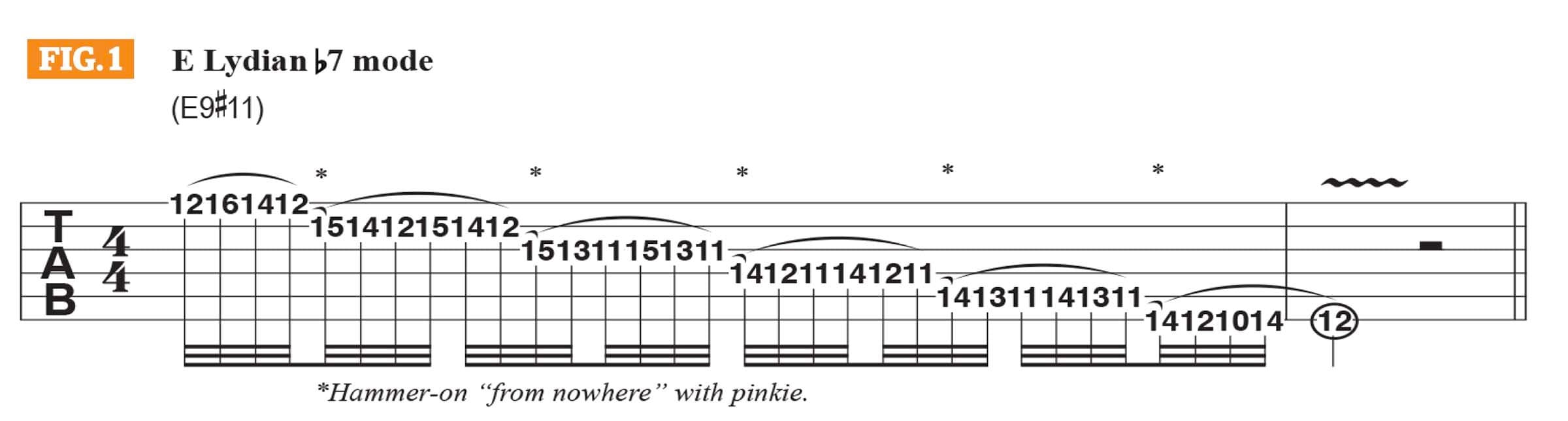
Alex Skolnick’s lesson develops smooth, connected legato phrasing while teaching the sound of E Lydian dominant through a lick influenced by Allan Holdsworth. Skolnick developed the phrase while studying Holdsworth in the early 1990s, then used it in Testament’s So Many Lies from the 1992 album The Ritual.
Details

E Lydian dominant, also called E Lydian b7, is the fourth mode of B melodic minor. B melodic minor contains B, C#, D, E, F#, G#, and A#. The featured lick packs continuous 32nd notes into one bar and crosses all 6 strings. It starts with E at the 12th fret of the first string, hammers to G# at the 16th fret, then pulls off through F# to E. The first note on the second string is D at the 15th fret, hammered with the pinkie without another pick stroke. Every note after the opening E uses hammer-ons or pull-offs. The top 2 strings use the first, third, and fourth fretting hand fingers. The G and D strings use the first, second, and fourth fingers. The A string returns to the first, third, and fourth fingers, while the low E string uses the first, second, and fourth fingers. The entire line stays within E Lydian dominant.
Why it matters to guitar players
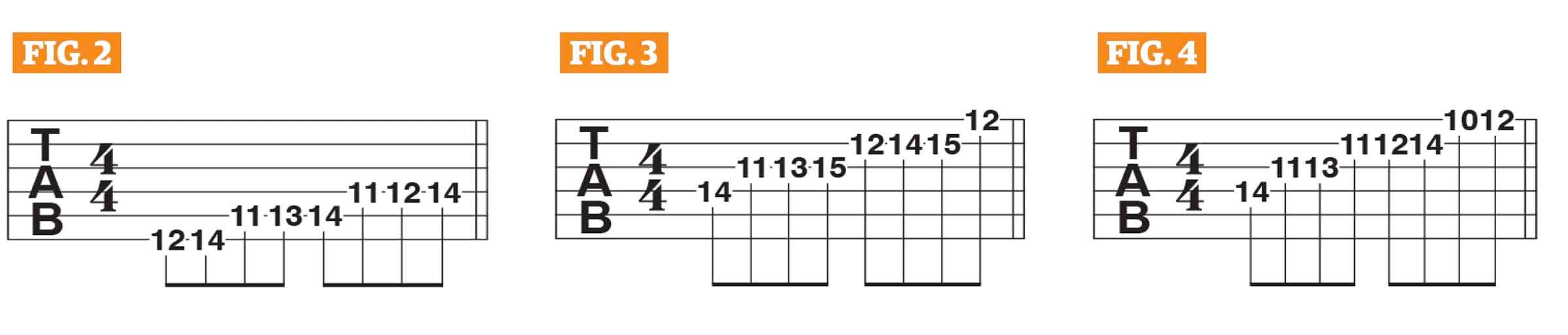
Legato relies on the fretting hand to connect notes while the picking hand does as little as possible. Learn E Lydian dominant one octave at a time before tackling the complete line. Then divide the lick into a top 3 string section and a bottom 3 string section, and practice each part until the notes connect cleanly. Once both halves join without gaps, move the idea to the 7th fret as B Lydian b7. This transposition keeps the same legato concept while changing the sound to the fourth mode of F# melodic minor.
(Compiled)