Keith Wyatt: CAGED Improves Blues Playing and Fretboard Knowledge
Keith Wyatt’s CAGED approach improved his blues playing and fretboard knowledge by connecting familiar phrases across five manageable zones instead of trapping them in one area. He learned the system from course material written by session guitarist Howard Roberts while studying at the Guitar Institute of Technology, where Wyatt later taught.

Connect five CAGED blues positions
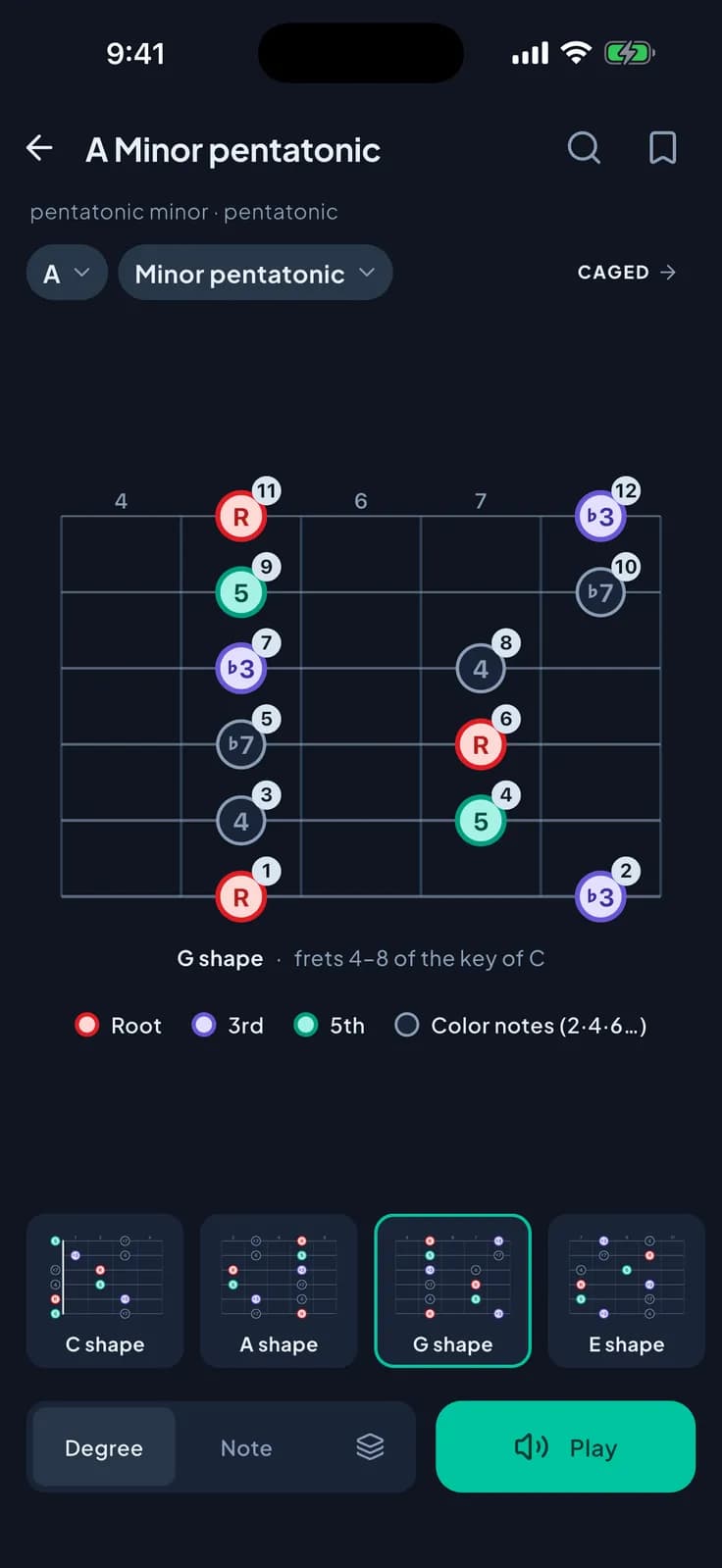
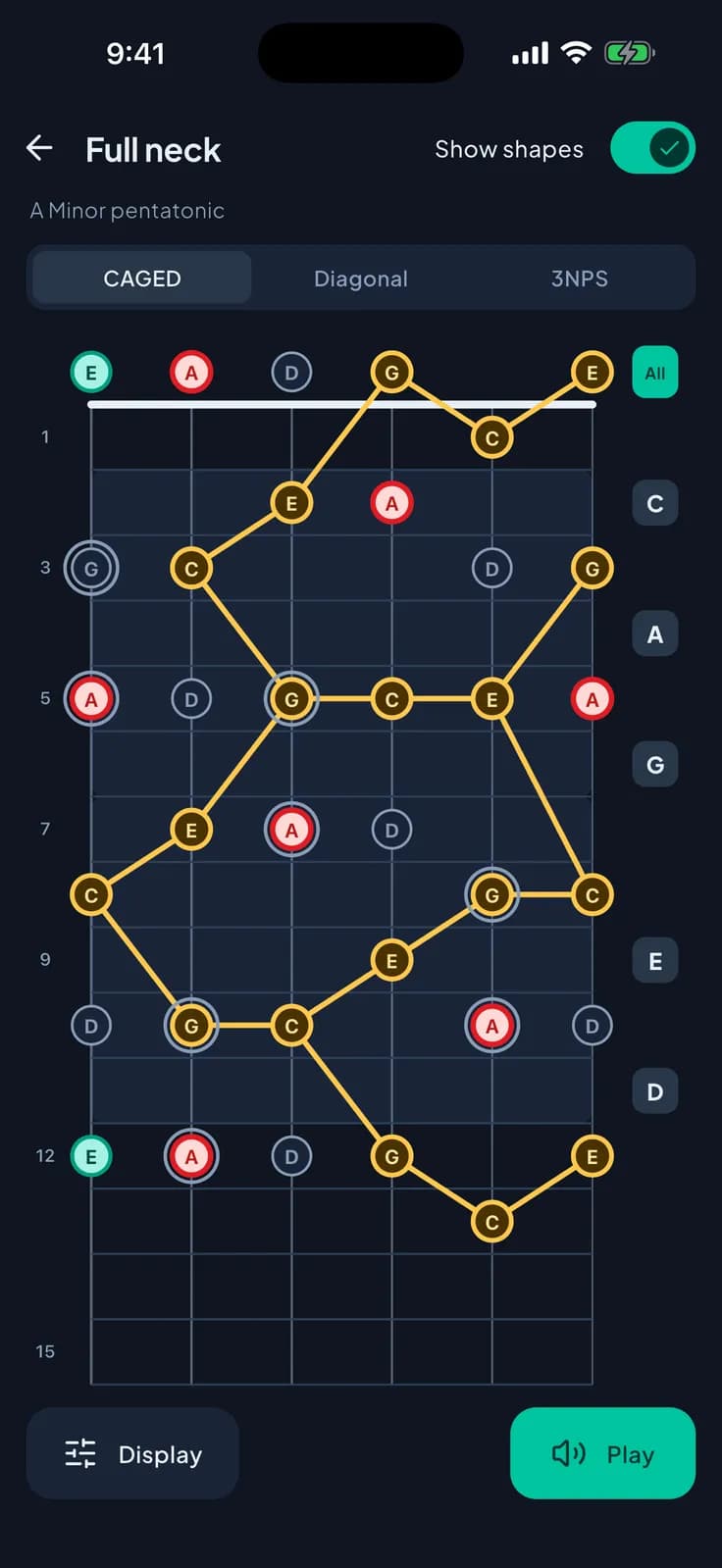
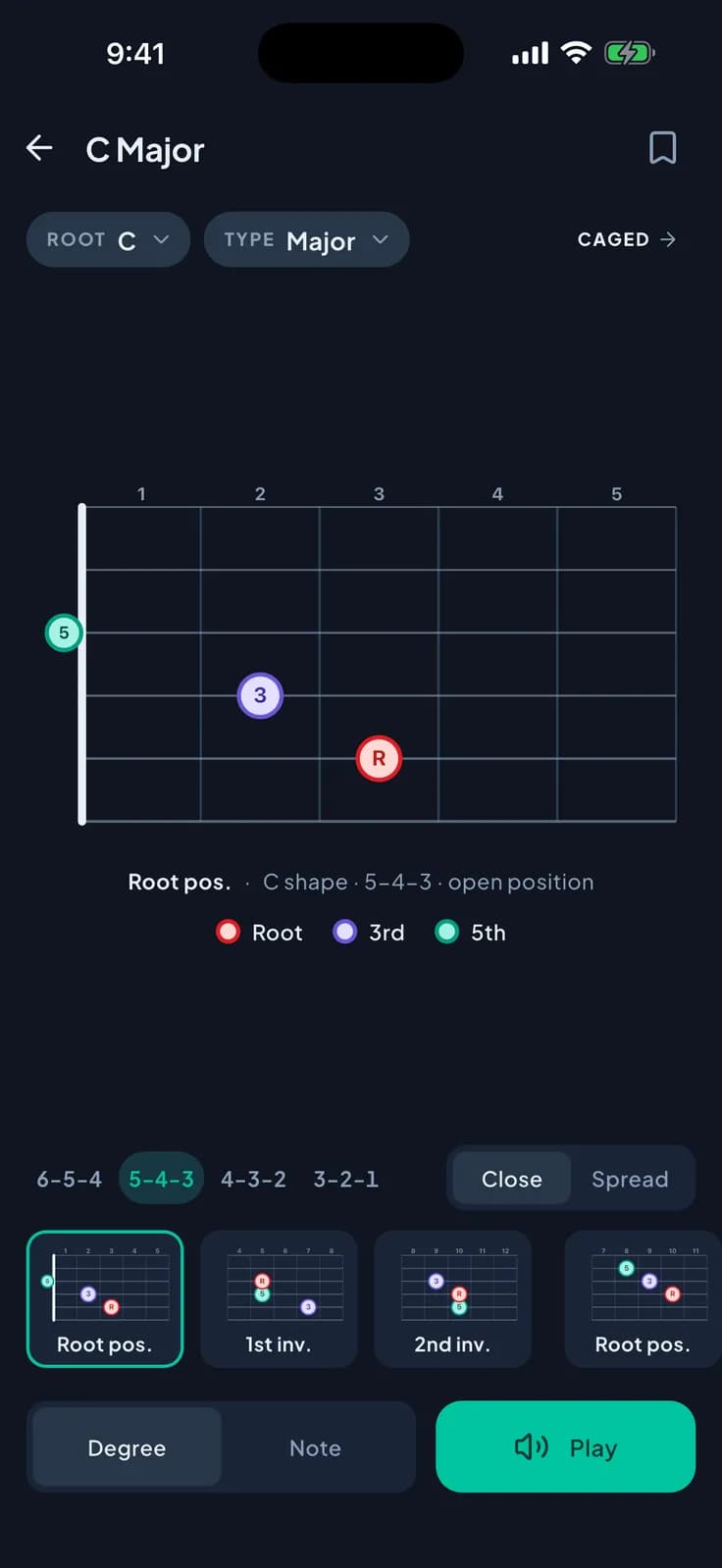
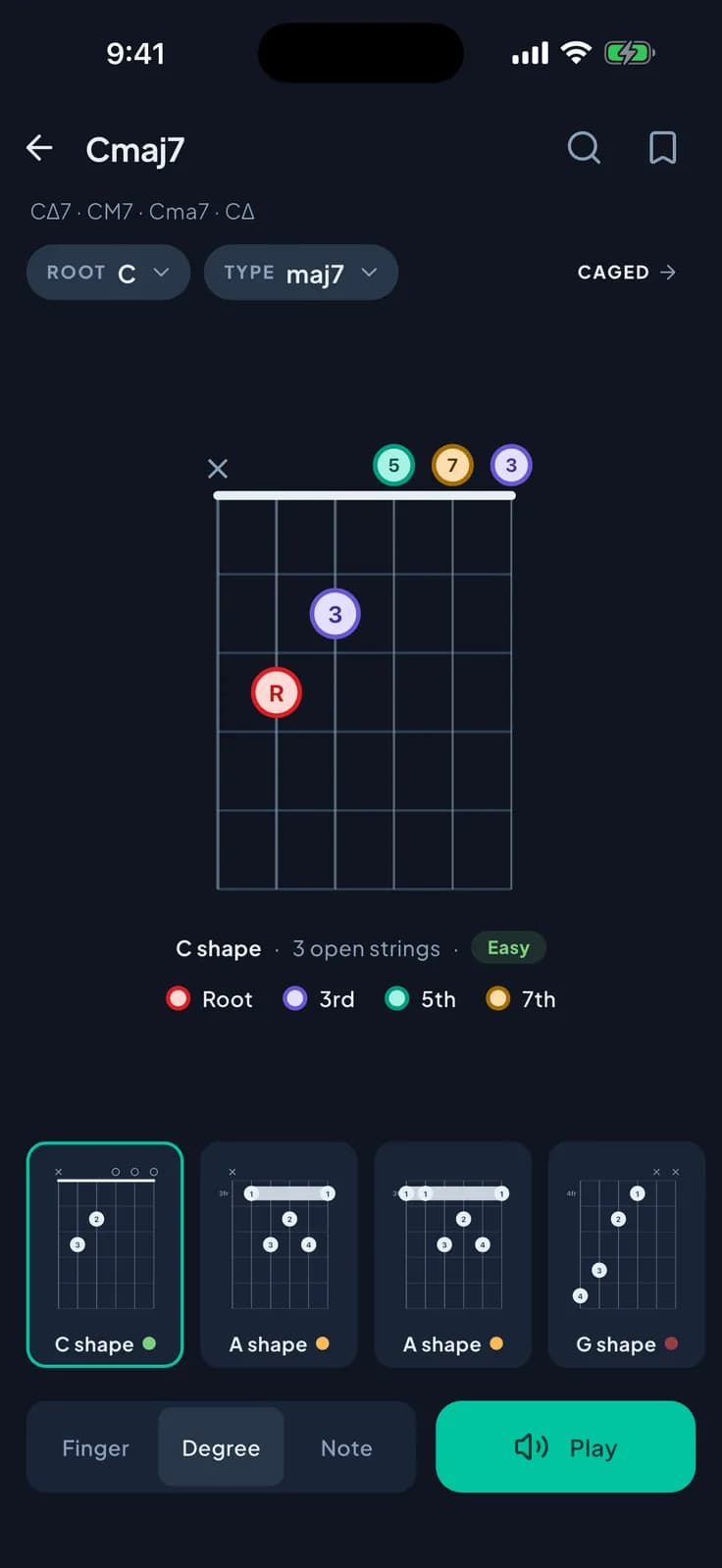
CAGED uses the C, A, G, E, and D chord shapes as a fretboard map. Each shape gives you a local view of chords, arpeggios (the notes of a chord played one at a time), scales, and licks. Because neighboring shapes overlap, you can connect them rather than treat each area as an isolated pattern.
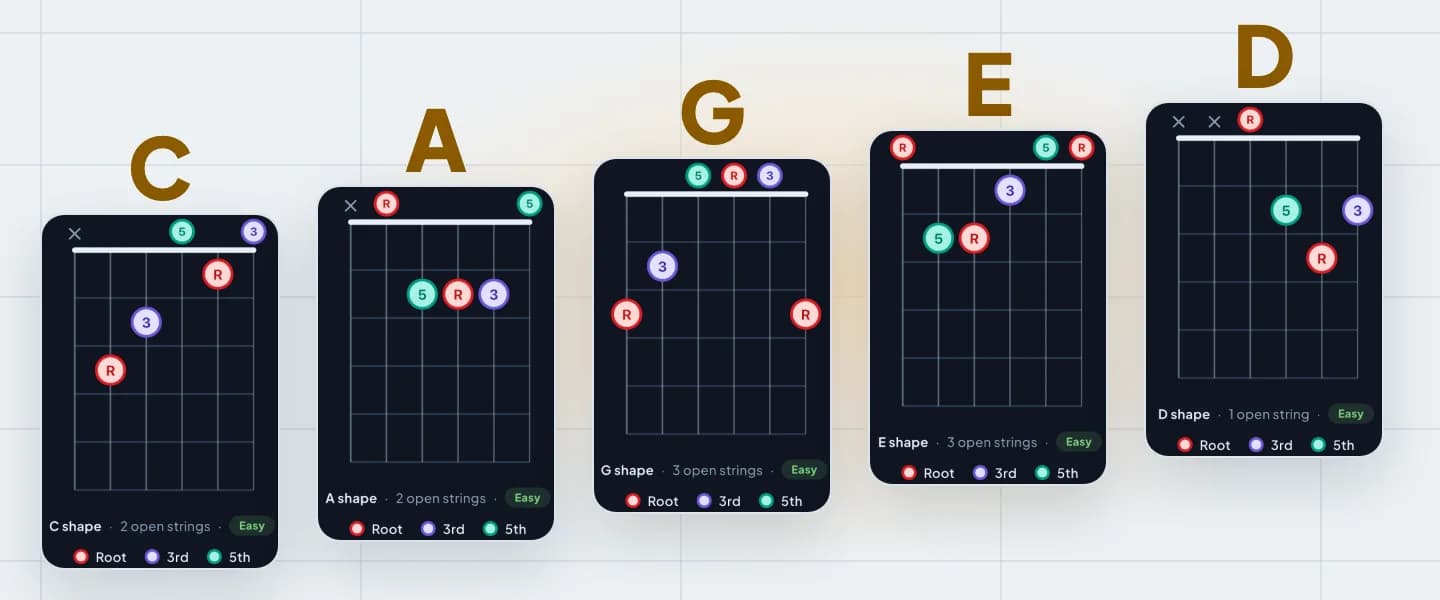
Wyatt demonstrates that connection with an ascending C blues phrase. He moves through all five areas using C major pentatonic, which contains C, D, E, G, and A, then adds Eb as the minor 3rd. The phrase resolves that Eb upward to E, the major 3rd, a common direction for this blues embellishment. Wyatt first establishes the groove by sliding into a C9 chord from a half step below, supported by muted strums and a tapped pulse.
The second example establishes the same C9 sound, then descends the fretboard with C minor pentatonic. Its notes are C, Eb, F, G, and Bb. Playing this minor vocabulary over a major chord creates a central blues sound, while the five CAGED shapes map the scale as one connected pattern.
Each area places different fingers on the target notes, so bends, slides, and other articulation can feel different. Link each shape with the neighboring shape above or below to remove the boundary between them.
Learn Wyatt’s licks exactly first. Then create a line in each CAGED shape and locate the same phrase in all five areas, changing octaves when its range prevents a direct repeat. You can also write a different phrase for each area to test its available bends, slides, and note connections.
(Via: Guitar Player)