Eric Gales’ 7 Position-Shifting Moves for Improvisation

Eric Gales uses 7 position shifting moves to connect fretboard areas and generate spontaneous ideas while improvising. Rather than memorizing a fixed solo, he follows melodic shapes as they emerge and lets them lead him across the neck.
Seven position shift moves
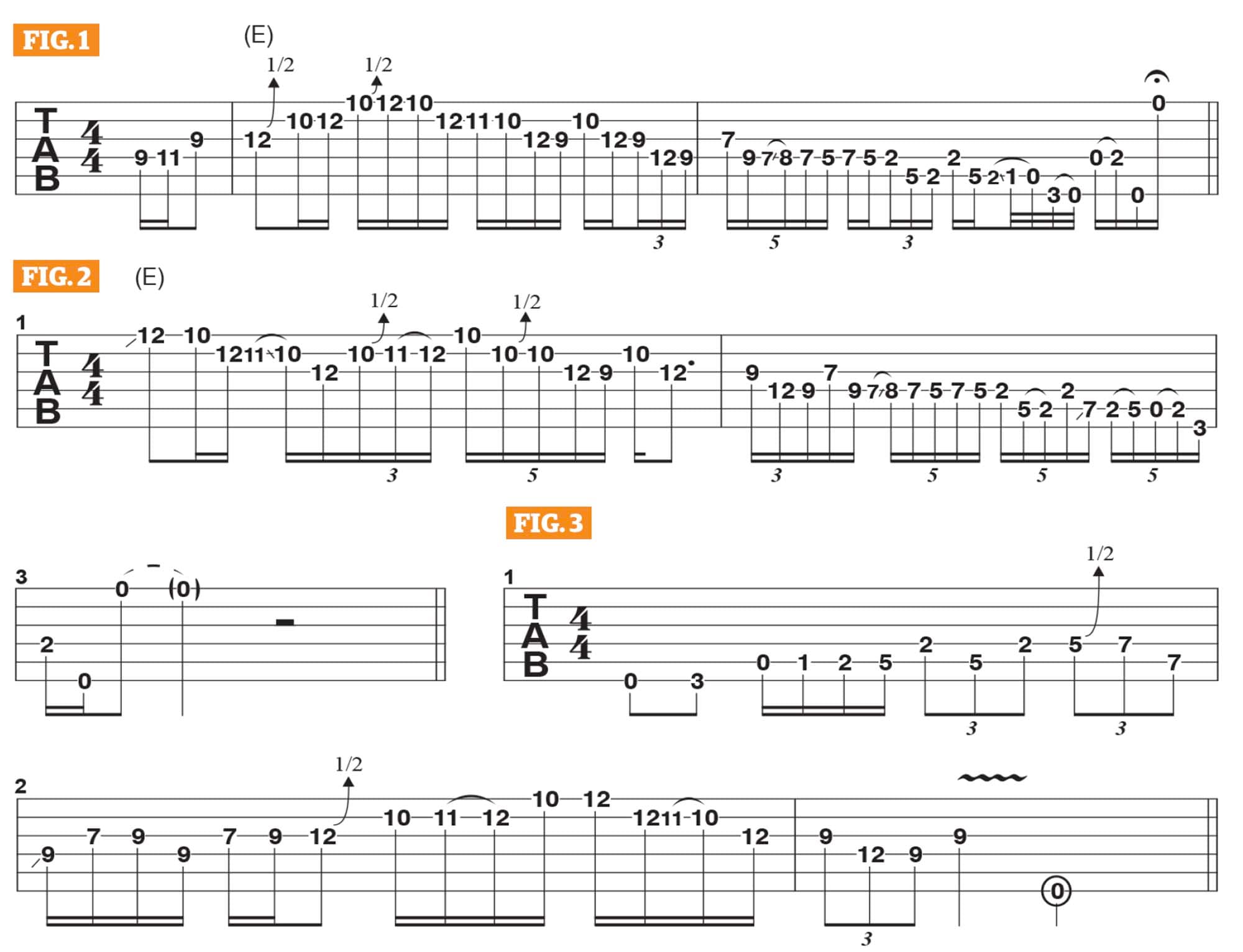
Major pentatonic to blues descent, Figure 1: Begin in E major pentatonic with B, C sharp, and E. Switch immediately to E blues around the 9th and 10th frets, then descend through areas near the 7th, 5th, and 2nd frets before reaching open position. Quick slides and pull offs lead into open strings.
Descending legato line, Figure 2: Start on the high strings and upper fretboard, then travel toward the low strings and 1st fret. Slides, bends, and hammer ons around the 10th fret give the E blues line a vocal like legato sound. Quintuplets carry it through areas near the 9th, 7th, 5th, and 2nd frets.
Ascending climb, Figure 3: Begin on the lower 3 strings near the 1st and 2nd frets. Climb through the 5th, 7th, 9th, and 10th fret areas, reach the high E note, then return to the G and D strings near the 9th fret.
Shape connection drill: Memorize every minor pentatonic and blues scale shape across all 6 strings in both directions. This keeps the available shapes visible when you jump between fretboard areas.
Descending E blues traversal, Figure 4: Play the E blues scale downward across the neck, moving from around the 10th fret to the 2nd fret.

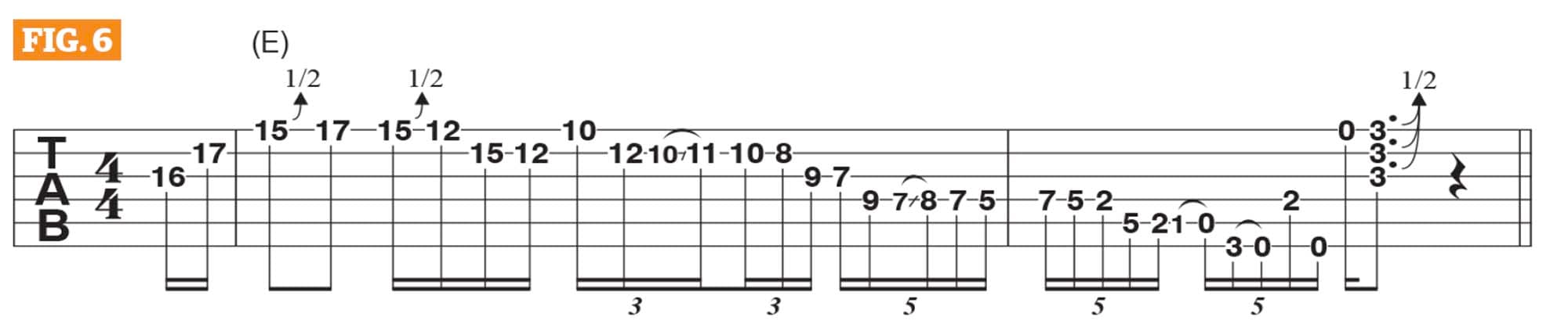
- Root note visualization, Figures 5 and 6: Find the root on each string in any key as you move up the fretboard. Figure 5 locates E on 5 strings, and that map guides the connected phrase in Figure 6.
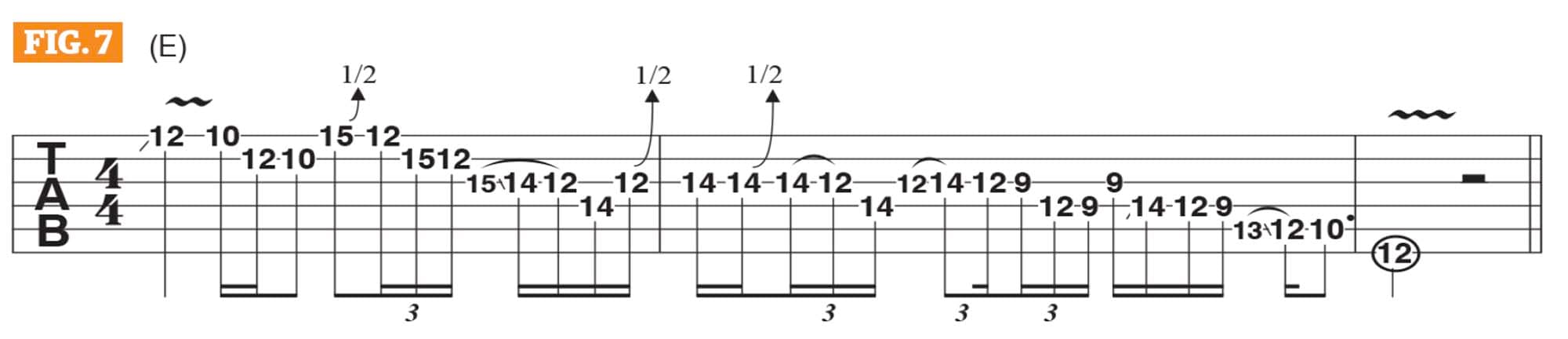
- High to low step ladder, Figure 7 and closing exercise: Follow a phrase from high to low while staying mostly in the upper fretboard region. Then shift upward twice, back once, upward twice again, and back down to find further melodic ideas.
Why these moves matter in daily practice
Treat the 7 moves as one connected routine. Build your neck map with moves 4 and 6, then alternate the descending lines in moves 1, 2, and 5 with the ascending climb in move 3. Finish with move 7, but leave the final pass open: follow the melodic shape you hear instead of deciding every shift beforehand.
(Via: Guitar World)